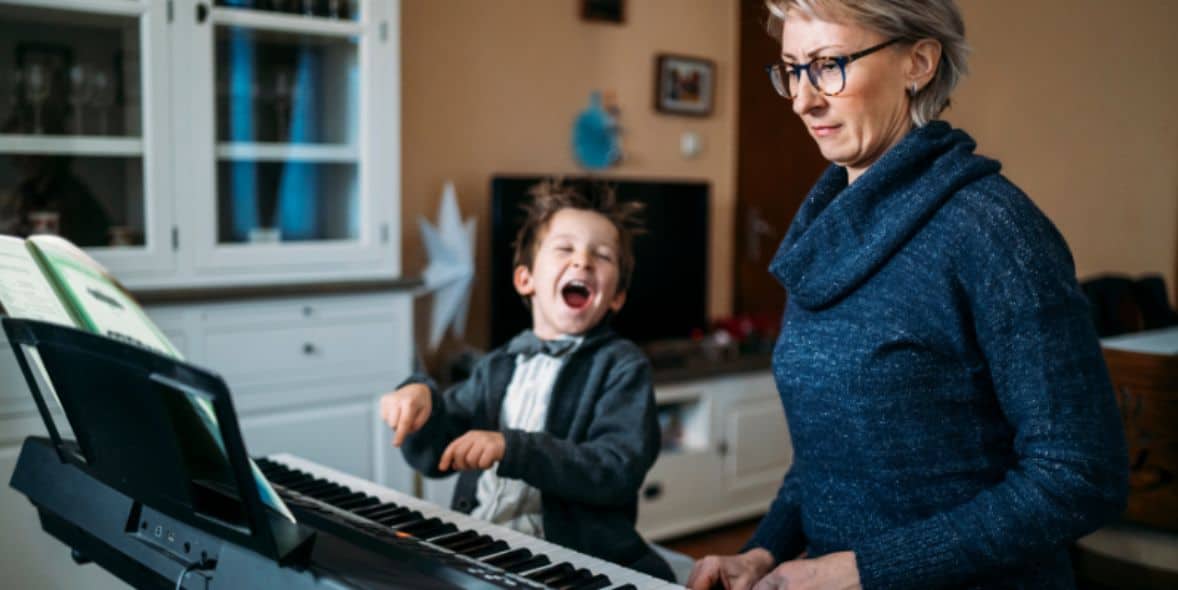
Many parents of autistic kids notice that their child lights up around music. They hum the same song for days, pick out tunes on a toy keyboard, or calm down when a favorite song plays. It’s natural to wonder whether piano lessons could work. For a lot of autistic children they can, with the right teacher and setup.
Can autistic kids learn piano?
Yes. Autism is common: the CDC’s latest count found about 1 in 31 eight-year-olds has an autism diagnosis, and Utah is one of the 16 areas it tracks. Autistic kids are as varied as any other kids. Some take to piano right away, some need a different way in, and a few aren’t interested. The setting and the teacher make the biggest difference.
What the research says about music and autism
The best research is on music therapy, not piano lessons, and the results are mixed.
- A 2022 Cochrane review combined 26 studies with 1,165 participants, mostly children aged 2 to 12. Right after therapy, children who had music therapy were more likely to show overall improvement, had lower overall autism symptom severity, and had slightly better quality of life. It found no clear difference in social interaction or communication. Certainty ranged from very low to moderate.
- A 2018 trial of 51 autistic children aged 6 to 12 found that 8 to 12 weeks of music sessions raised parent-rated communication scores compared with a non-music activity. It did not change autism severity.
- The largest trial, published in JAMA in 2017, followed 364 children aged 4 to 7 in nine countries and found that improvisational music therapy did not reduce social symptoms.
The honest takeaway: music can help some children in some ways, but piano lessons are music education, not therapy. Board-certified music therapists (MT-BC) complete an approved clinical training program and a national exam, and Utah has offered state certification for music therapists since 2014. If your goals are therapeutic, a music therapist is the right person. If your goal is for your child to learn and enjoy piano, a patient, flexible teacher is.
Why piano suits many autistic kids
- It’s predictable. The same key always makes the same sound. Many kids find that reassuring.
- It’s visual and logical. The keyboard’s repeating pattern of black and white keys is easy to see and to learn by pattern.
- It doesn’t depend on talking. A lot of piano can be taught by showing and copying, which helps kids who communicate in other ways.
- It can follow a special interest. A child who loves trains, video games or one particular movie can learn the music that goes with it.
How a good teacher adapts lessons
- A visual schedule. Indiana University’s autism resource center says there is “clear research evidence” for visual schedules with autistic kids. A schedule shows “what is going to happen and the order of events.” For a lesson, that might be three pictures: warm-up, new song, favorite song.
- The same routine every week. Same teacher, same day, same order of activities. When something does change, put it on the schedule ahead of time.
- Sensory awareness. Sudden or loud sounds can be painful for some kids. A digital piano’s volume can be turned down, and the teacher should warn before a loud demonstration. Ear defenders help some children, though the UK’s National Autistic Society notes that wearing them all the time may increase sensitivity.
- Short, varied tasks. A 30-minute lesson can move through several short activities so focus resets before frustration builds.
- More than one way in. If reading notes is hard, a child can start by ear or by making up their own music. Those are two of the four pillars of the Volz Method.
Many of the same strategies help kids with ADHD. See our parent guide to piano lessons for kids with ADHD.
Why lessons at home help
For many autistic kids, a new building, a waiting room and a drive after school are hard before the lesson even starts. At home, your child plays their own piano in a room they know. More on that in the hidden benefits of lessons at home and on our special needs piano lessons page.
Questions to ask a piano teacher
- Have you taught autistic students before? What worked?
- How do you handle a lesson when my child is overwhelmed?
- Can you use a visual schedule or keep the same routine each week?
- How will you communicate with me about progress?
- Is it OK if I stay nearby during lessons?
A good teacher will welcome these questions and ask you plenty of their own.
Preparing for the first lesson
- Tell the teacher ahead of time about sensory triggers, how your child communicates, and what motivates them.
- Show your child a photo of the teacher and a simple picture schedule beforehand.
- Expect early lessons to be short or to look different from a typical lesson. That’s normal.
- Plan to stay close by at first. Here’s how to decide whether to sit in on lessons.
Common questions
Is piano good for autism?
Many autistic children enjoy piano and do well with lessons. Research on music therapy shows some modest benefits, but piano lessons aren’t a treatment. Their value is in learning music in a way that fits your child.
Can nonverbal autistic children learn piano?
Yes. Piano can be taught largely by demonstration and imitation, and some nonverbal children find music a comfortable way to express themselves.
Are Volz Method teachers music therapists?
No. They’re piano teachers, and every teacher trains for three months in the Volz Method, which centers on adapting each lesson to how a child learns.
Can we use the Utah Fits All Scholarship for piano lessons?
Volz accepts the Utah Fits All Scholarship. Eligibility and approved expenses are set by the program, so check your account first. See Utah Fits All piano lessons.
Where can Utah families find autism support?
The Utah Parent Center and the Autism Council of Utah both offer free resources for families.
Let’s talk about your child
Every child is different, and the best way to know if lessons will work is to talk it through. Book a free 15-minute call and tell us about your child. We’ll be honest about whether a Volz Method teacher is a good fit.