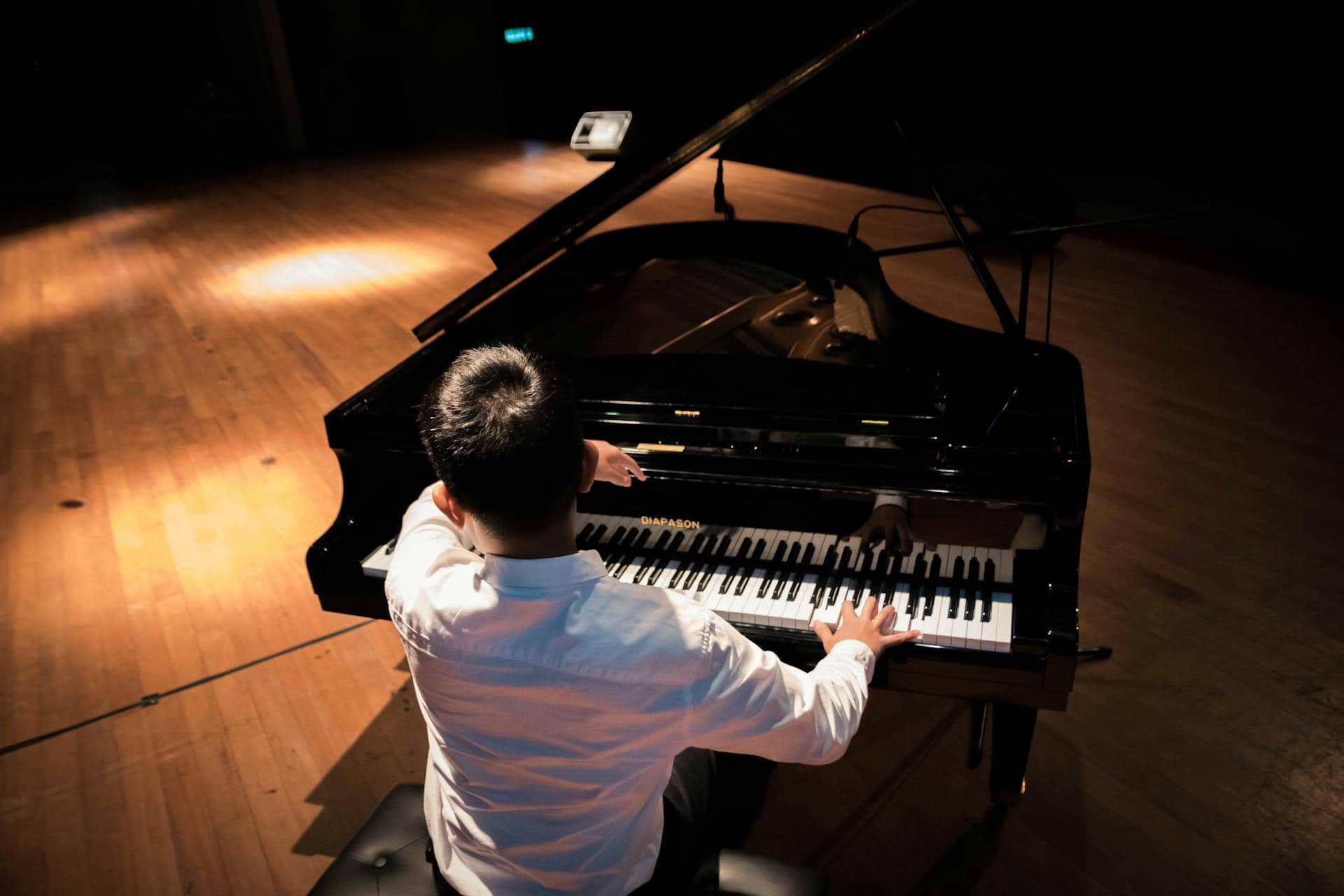
Your child’s first piano recital is a big moment. For a lot of kids it’s the first time they’ve played for anyone outside the family, on a piano they’ve never touched, in a room full of people they don’t know. It’s also one of the best confidence builders in childhood, as long as they walk in prepared.
This guide covers what parents can do in the weeks before, what to wear and bring, how to handle nerves, and what to say before and after your child plays.
The short version
- Pick a piece your child can already play well, not one they’re still learning.
- Practice performing, not just playing: full run-throughs without stopping, plus a few “mini recitals” at home.
- Have your child practice in their recital shoes, and on a different piano if you can.
- Expect some nerves. They’re normal, and they can be turned into excitement.
- Before: “I can’t wait to hear you.” After: “I’m proud of you for getting up there.”
How to prepare for a piano recital: a timeline
Four or more weeks out
Ask the teacher what piece your child will play, the date and time, whether the piece needs to be memorized, and whether there’s a dress code. The best first recital piece is one that’s a little easier than what your child is working on in lessons. Performing makes everything feel harder, so a piece they can play comfortably at home is the right one for the stage.
This is also the time to settle on the piece for good. Switching pieces two weeks before a recital rarely ends well.
Two to three weeks out
Once the notes are solid, add one performance run-through to each practice session: start to finish, no stopping, no going back to fix mistakes. This is a different skill from regular practice, and it’s the one your child will need on recital day. Regular practice still matters too. Spend most of it on the trickiest spots, the same way you would any other week (more on that in the 80/20 rule for piano).
Two small habits make a big difference:
- Practice the first and last lines most. A confident start settles the nerves, and a strong ending is what the audience remembers.
- Set up “landing spots.” Have your child practice starting from three or four places in the piece. If they slip on stage, they can jump to the next landing spot and keep going instead of starting over.
One to two weeks out
Hold a few mini recitals at home. Set up chairs in the living room, invite siblings, or have grandparents watch on a video call. Practice the whole routine: walking to the piano, adjusting the bench, taking a breath before starting, and bowing at the end. Kids who have done the routine five times at home aren’t surprised by it on stage.
Have your child practice at least once in the shoes they’ll wear. A dress shoe feels very different on a pedal than socks or bare feet.
The week of the recital
No new material this week. Keep practice sessions short and confident, and end each one on a good run-through.
If you can, let your child try a different piano: a grandparent’s, a friend’s, or one at your church or school. A recital piano, often an acoustic grand, can feel and sound quite different from the piano at home. The keys may be heavier or lighter, the sound is bigger, and the pedal sits in a different spot. This matters most for kids who practice on a digital piano, so it’s worth asking the teacher whether students can try the recital piano before the program starts.
Recital day
- Keep the day as normal as possible, with a good meal and a snack beforehand.
- Arrive early so your child can find their seat, use the restroom, and see the room before it fills up.
- Keep hands warm. A December recital in Utah can mean cold, stiff fingers, so gloves on the way in and a little warm water on the hands before the program help.
- Skip a last-minute full practice. One easy warm-up run at home is plenty.
What should kids wear to a piano recital?
Most recitals call for “church clothes” or dressy casual: a nice dress or skirt, or slacks with a button-up shirt or sweater. Your child’s teacher will tell you if there’s a specific dress code. Beyond looking nice, a recital outfit should be easy to play in:
- Shoes: flat, thin-soled shoes your child has practiced in. Avoid flip-flops, heels, and chunky boots, which make pedaling hard.
- Sleeves: nothing that hangs past the wrists or catches on the keys.
- Accessories: skip bulky bracelets, rings, and anything that jingles.
- Dresses and skirts: make sure your child can sit comfortably on a bench and reach the pedals.
- Hair: pulled back or out of the eyes, so your child can see the keys and the music.
A practice run in the full outfit the weekend before catches most problems.
What to bring
- The sheet music, even if the piece is memorized
- A water bottle
- A small snack for afterward
- Gloves or a jacket for cold hands
- Flowers or a small gift, if you’d like (more on that below)
- A phone on silent, if recording is allowed
Helping your child with nerves
Almost every performer gets nervous, from first-time students to professionals. The goal isn’t to make the nerves disappear. It’s to help your child know what to do with them.
Call it excitement. Nervous and excited feel almost the same in the body: a fast heartbeat and a fluttery stomach. Relabeling the feeling can help. Harvard Business School researcher Alison Wood Brooks tested this in a well-known study published in the Journal of Experimental Psychology: General in 2014. People about to sing karaoke were asked to say “I am anxious,” “I am excited,” or one of several other statements. Those who said they were excited sang more accurately than those who said they were anxious or calm. Brooks’ advice is to say “I’m excited” out loud, even if you don’t believe it at first. For a child, that might sound like: “My heart’s beating fast because I’m excited to play.”
Slow breaths. Teach a simple breath for the bench: “Smell the flower” (slow breath in), “blow out the candle” (slow breath out). Two of those before the first note help settle shaky hands.
Plan for mistakes. Tell your child ahead of time: “If you make a mistake, keep going.” Most of the audience won’t notice a wrong note, but everyone notices a performer who stops and starts over. Landing spots make this easier.
Keep the stakes low. A recital is a chance to share music, not a test. Avoid promising rewards for a perfect performance, since that turns every wrong note into a lost prize.
If your child is very anxious, talk with the teacher. They’ve seen it many times and may suggest playing earlier in the program, having the teacher sit nearby, or using the music instead of memorizing.
What to say before and after
Before your child plays, keep it short and warm:
- “I love hearing you play.”
- “Have fun up there.”
- “I’m excited to hear it.”
Skip “Don’t be nervous” (it suggests there’s something to be nervous about) and “Don’t mess up” (it plants the exact thought you don’t want).
After, lead with the courage it took, not the notes:
- “I’m proud of you for getting up there.”
- “How did it feel?”
- “What was your favorite part?”
Leave feedback on the performance to the teacher, and for another day. The car ride home is for celebrating.
Recital etiquette for the family
- Arrive on time and silence your phone.
- Clap when each performer finishes and stands to bow, not during pauses in a piece.
- Stay for the whole program, not just your child’s turn. Every performer deserves an audience, and it teaches your child to support other musicians.
- Ask about the recording policy, and if it’s allowed, record from your seat without blocking anyone’s view.
- Bring quiet activities for young siblings, and step out with them if they get restless.
- Guests can dress the way they would for church or a nice dinner. Matching your child’s level of dress shows them the day matters.
First piano recital gift ideas
Flowers are a long-standing recital tradition, and a small bouquet after a first recital is a lovely touch. A few other ideas:
- Dinner or a treat at your child’s favorite spot
- The recital program framed with a photo from the day
- A book of songs they’ve been wanting to learn
- A handwritten note from you (or a grandparent) about what it was like to watch them play
The best gifts celebrate the courage it took, not just the performance. For more ideas, see our gift guide for kids learning piano.
Common questions
What are good first piano recital songs?
A piece your child already plays comfortably, a little easier than what they’re working on in lessons, and ideally one they love. Your child’s teacher will help choose it. For December recitals, a holiday song is often a hit; here are easy Christmas songs kids can learn by December. You’ll find more ideas in fun, easy songs kids actually want to learn.
Does my child need to memorize their recital piece?
It depends on the teacher. Many first recitals let students use their music. If your child is memorizing, have them keep the music on the stand anyway as a safety net, unless the teacher says otherwise.
What if my child freezes or cries?
It happens, and it’s rarely as big a deal as it feels in the moment. Teachers handle it all the time, often by sitting next to the student or letting them try again at the end of the program. Afterward, focus on the fact that they got up there. Many kids who struggle at a first recital do great at the second one.
How long is a typical student piano recital?
It depends on how many students are playing, but many student recitals last an hour or less. Each child usually plays one or two short pieces, so ask the teacher how long to plan for, especially if you’re bringing younger siblings.
Lessons that build confident performers
Volz Method teachers come to your home each week, and many host recitals for their students, so kids get a chance to share what they’ve learned. Lessons are built around music your child is excited to play, which makes performing for family and friends something to look forward to. Book a free 15-minute call to see if lessons are a good fit for your child.