Table of Contents
- What Are Private Piano Lessons For Kids?
- Benefits Of Private Piano Lessons For Children
- Why Utah Families Choose Private Piano Lessons At Home
- Inside A Typical Private Piano Lesson
- The Volz Piano Method For Kids
- When Should A Child Start Private Piano Lessons?
- How To Choose The Right Private Piano Teacher
- Setting Up Your Home For Private Piano Lessons
- Practice Routines That Help Kids Progress
- Costs, Scheduling, And Long Term Value
- Private Piano Lessons Near Me In Utah With Volz Piano
- FAQs About Private Piano Lessons
What Are Private Piano Lessons For Kids?
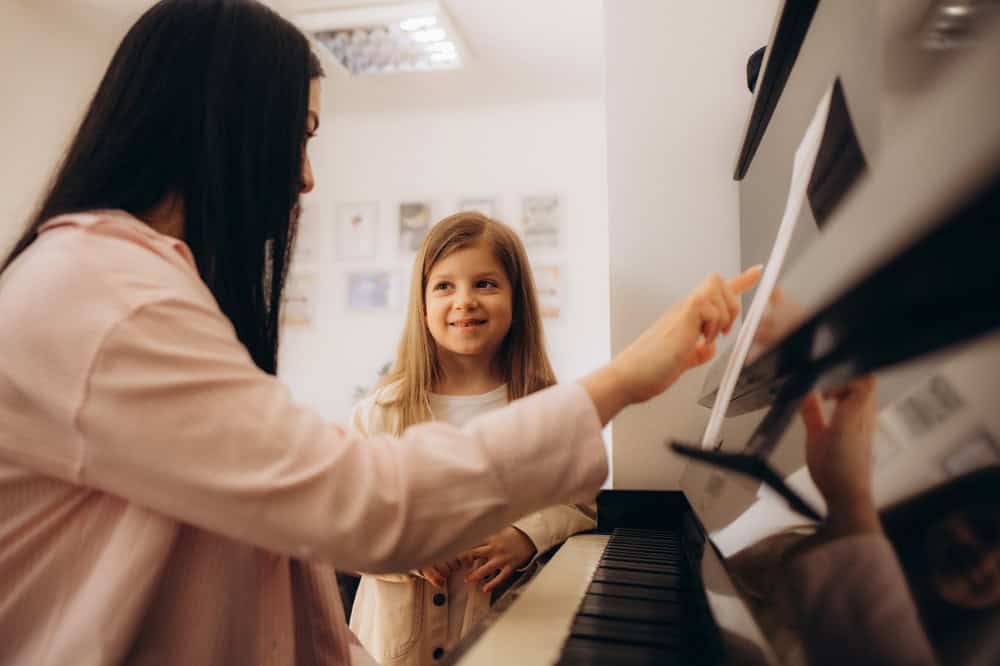
Private piano lessons are one on one sessions between a child and a piano teacher. Instead of sharing the teacher with a full class, your child receives individual attention for the entire lesson. That means the teacher can notice tiny details in hand position, tailor songs to your child’s interests, and adjust the pace to match your child’s learning speed. Families who work with Volz Piano in Utah get this individual instruction through a unique model where piano teachers drive to the family home. This child centered approach blends the structure of a formal piano method with the comfort of in home learning, which is especially helpful for shy or anxious beginners.One On One Instruction Versus Group Classes
In a group class, a teacher has to divide attention among many kids. Group lessons can be fun and social, but it is harder to slow down for one child who is struggling or speed up for a child who is ready for more challenge. In private piano lessons, the entire lesson belongs to your child. Key differences include:- Pace: In private lessons, the teacher moves at your child’s pace. If your child understands a concept quickly, the teacher can introduce new material. If something is confusing, the teacher can pause and explain in a different way.
- Song choice: Private teachers can select music that fits your child’s personality. Some kids love classical, others prefer movie themes or pop songs. Lessons feel more meaningful when the music fits your child.
- Feedback: One on one time allows for detailed, specific feedback on posture, hand shape, rhythm, and expression. Small corrections early prevent bad habits later.
- Comfort level: Some children feel nervous playing in front of peers. Private lessons let them experiment, make mistakes, and ask questions without feeling watched.
Lesson Formats: Studio, Online, And In Home
Private piano lessons can happen in several formats:- Teacher’s studio: Your child travels to the teacher’s home or studio. This often includes access to a high quality acoustic piano and a focused learning environment, but it requires travel time and transportation.
- Online lessons: Lessons happen over video chat. These can work well for older children with strong focus and good internet, but it can be harder for young beginners who need more hands on guidance.
- In home lessons: The teacher drives to your house and teaches on your piano or digital keyboard. Programs like Volz Piano’s private piano lessons at home are designed around this model, especially for kids in Utah.
Benefits Of Private Piano Lessons For Children
Parents often ask whether private piano lessons are worth the investment of time and money. Decades of research and real world experience show that regular music study supports brain development, school success, social skills, and emotional health. Researchers who studied musical training and cognitive development found that long term music study strengthens attention, memory, and language skills, and supports both near and far transfer to other tasks according to an open access review of music training and the brain. These benefits build over time, which makes consistent private piano lessons in childhood especially powerful.Cognitive And Academic Benefits
Music learning activates many parts of the brain at once. Children listen, read, move, count, and remember patterns while they play. This rich mental workout is associated with several academic gains. Education organizations note that music education supports improved memory, stronger attention, and better language skills, which all contribute to school success. An article on the benefits of music education for children from Connections Academy explains that music participation is linked with improved cognitive development, including language and mathematical skills, and greater overall academic achievement. You can read more about these findings in their discussion of music education benefits for kids. Other education experts point out that learning music supports concentration and deeper thinking. A resource for teachers on the importance of music education notes that music can improve academic performance, help with attention, and encourage persistence in challenging tasks. These ideas are summarized in articles such as The Importance Of Music Education In Schools, which highlight how music study contributes to core school skills. For your child, this might look like:- Improved ability to focus during homework or reading assignments
- Better working memory, which helps with multi step directions and problem solving
- Stronger sense of pattern and structure, which supports math and science learning
Emotional And Social Benefits
Music gives kids a safe way to express feelings. Playing a calm piece after a tough day or celebrating with a bright, energetic song can be deeply satisfying. It also builds emotional skills such as patience, resilience, and pride in hard work. Articles about music education frequently note that learning music helps children manage emotions, communicate clearly, and build empathy. A recent summary of parent survey results shared by Parents magazine describes how music programs are linked with higher confidence and emotional well being. In their report on how music boosts children’s confidence, they explain that parents see music as a major factor in happiness and emotional growth; those ideas are explored further in this overview of music and kids’ confidence. Private piano lessons add another layer. Because lessons are one on one, the teacher often becomes a trusted mentor. Many kids feel comfortable sharing small victories, frustrations, and goals during lessons. Over time, students learn that consistent effort, honest feedback, and persistence lead to progress.Confidence, Discipline, And Creativity
Learning a piece from the first hesitant notes to a finished performance is a powerful experience for a child. They see proof that small, daily actions add up to something impressive. Private piano lessons support:- Confidence: Performing a piece for family, friends, or at a recital helps children feel brave. They practice starting even when nervous, and finishing with pride.
- Discipline: Piano practice encourages children to show up regularly, break big goals into steps, and take responsibility for their progress.
- Creativity: Through improvisation, composing simple patterns, or experimenting with dynamics, kids learn that music is a place where they can explore ideas and express themselves.
Why Utah Families Choose Private Piano Lessons At Home
Utah families have busy lives. Between school, sports, church activities, and family time, many parents prefer learning options that fit naturally into the weekly schedule. Private piano lessons at home solve a number of challenges at once. Programs like kids piano lessons at home with Volz Piano are designed specifically for families in areas such as Salt Lake County and Utah County. Instead of driving across town to a music studio, you can welcome a trained instructor into your home and let your child learn on the same instrument they practice on each day.Piano Teachers That Drive To You
Volz Piano’s signature model centers on “Piano Teachers that Drive to You.” This means:- You do not need to pack up siblings, fight traffic, or search for parking.
- Your child stays in a familiar environment and can begin lessons calm and relaxed.
- Parents can easily listen from the next room or sit nearby to understand what to support during practice.
Comfortable Learning Environment
Many children play their best when they feel safe and comfortable. Learning in their own home often reduces performance anxiety, especially for younger students or children who are sensitive to new environments. Additional benefits of in home learning include:- Kids can warm up at the instrument before the teacher arrives.
- Parents can create routines around lessons, such as a quick snack beforehand or a short family “mini recital” afterward.
- Children associate piano with their daily life, not only with trips to a studio.
Safety And Time Management
In home private lessons also help with safety and time management. There is no need for late night driving in winter, no waiting in parking lots, and no shuffling siblings in and out of buildings for short sessions. Families can use the saved drive time for quality activities such as reading, unstructured play, or simply resting. Over a full school year, this can free up many hours while your child still receives weekly one on one instruction. Return to Table of ContentsInside A Typical Private Piano Lesson
Knowing what happens during a private piano lesson helps parents feel confident and prepared. While every teacher has a unique style, most lessons follow a clear structure so children know what to expect. At Volz Piano, the structure is guided by the Volz Piano Method, which we will explore in a later section. Here is a general picture of what a typical 30 or 45 minute private lesson might include.Warm Ups And Technique
Lessons usually start with a short warm up. This might include:- Simple finger patterns to wake up the hands
- Review of posture and bench height
- Checking curved fingers, relaxed shoulders, and steady wrists
Reading, Ear Training, And Theory
Most private piano lessons weave together three strands:- Reading: Learning to read notes and rhythms on the staff, recognize patterns, and connect what they see on the page to what they play on the keys.
- Ear training: Listening carefully to melodies, harmonies, and rhythms, matching pitches, and hearing differences such as high and low or loud and soft.
- Theory: Understanding basic concepts such as scales, chords, intervals, and key signatures in a child friendly way.
Games And Creativity
Private lessons for children work best when they mix serious learning with play. Teachers often use short games to reinforce concepts. For example, a child might:- Roll a die to decide how many times to repeat a tricky measure
- Play a piece in different “moods” to explore dynamics and expression
- Compose a simple pattern using only two notes, then expand it during the lesson
The Volz Piano Method For Kids
Volz Piano is built around a child centered curriculum developed over many years of teaching. The Volz Piano Method is designed specifically for kids and used by instructors who serve families throughout Utah. According to the Volz Piano overview of their method, the curriculum combines interval based reading, ear training, and creative improvisation so kids can connect technique, theory, and musical expression. You can explore more detail in their article on piano teaching methods for kids.Core Principles Of The Volz Piano Method
While each child’s journey is unique, the Volz Piano Method consistently emphasizes:- Kid friendly structure: Lessons follow a clear, step by step path, so children always know what they are working toward.
- Balanced skills: Technique, reading, rhythm, ear training, and creativity are all included instead of focusing on only one element.
- Real songs: Kids play music that feels rewarding, not only dry exercises, so they stay motivated.
- Visible progress: Level books and clear milestones let students and parents see growth from the first notes to more advanced pieces.
Adapting To Different Learning Styles
Children learn in different ways. Some are highly visual, others learn best through listening, and many need to move and feel the rhythm in their bodies. In private lessons, Volz Piano teachers adapt the method to fit each child. Adaptations might include:- Using color coded notation or stickers for young visual learners
- Clapping and chanting rhythms for kinesthetic learners
- Playing call and response patterns by ear to build listening skills
- Connecting pieces to stories or images for imaginative students
Support For Parents Through Volz Piano
Parents are vital partners in private piano lessons. Volz Piano gives families tools to understand and support their child’s practice. Through resources on their website, such as their parent friendly guide to private lessons at home and articles on topics like finding piano lessons near you, parents can learn what questions to ask, how to set up a good practice routine, and how to encourage progress. In addition, Volz Piano teachers often communicate directly with parents at the beginning or end of lessons, sharing small goals for the week and celebrating wins. Return to Table of ContentsWhen Should A Child Start Private Piano Lessons?
There is no single perfect age to begin private piano lessons, but there are helpful guidelines. Some children are ready for formal lessons at four or five, while others may benefit from waiting until age six, seven, or later. Rather than focusing only on age, look for readiness signs in attention, fine motor skills, and interest.Age And Readiness Signs
Signs that your child may be ready for private piano lessons include:- They can focus on a simple task for 10 to 15 minutes.
- They can follow basic directions from adults who are not immediate family.
- They can move individual fingers fairly well, even if coordination is still developing.
- They are curious about instruments, sing frequently, or tap rhythmic patterns on tables.
Pre Piano Activities For Younger Children
If your child is not quite ready for private piano lessons, you can still nurture musical growth at home. Helpful activities include:- Singing simple songs together every day
- Clapping and stepping to steady beats
- Exploring high and low sounds on a small keyboard with supervision
- Listening to a variety of music styles and talking about how they feel
How To Choose The Right Private Piano Teacher
A great private piano teacher does more than demonstrate notes on a page. They become a guide, coach, and encourager for your child. Choosing the right teacher is one of the most important decisions you will make in your child’s musical journey. Programs like Volz Piano simplify this step by recruiting and training instructors in a consistent method, but it still helps to know what to look for and which questions to ask.Qualifications And Background
When evaluating teachers, consider:- Education and training: Does the teacher have formal training in piano performance, music education, or a related field, or significant teaching experience with children?
- Experience with kids: Teaching children is different from teaching adults. Look for experience with kids around your child’s age.
- Method used: Ask which piano method they use and why. At Volz Piano, all teachers are trained in the Volz Piano Method so students across Utah receive structured, child friendly instruction.
Teaching Style And Communication
Beyond credentials, your child’s connection with the teacher matters. During a trial lesson or first call, pay attention to:- How the teacher speaks to your child, including tone and patience
- Whether they balance encouragement with clear expectations
- How they explain mistakes and guide corrections
Questions To Ask Before You Enroll
Helpful questions for any potential private piano teacher include:- What ages and levels do you teach most often?
- How do you handle a student who is nervous or shy?
- What do your first four lessons with a brand new student typically cover?
- How do you involve parents in practice support at home?
- Do you teach in home, online, or in a studio, and which do you think is best for my child?
Setting Up Your Home For Private Piano Lessons
A thoughtful home setup can make a big difference in how effective private piano lessons feel. You do not need a huge music room or expensive decor, but you do want a space that is comfortable, quiet, and inviting.Choosing A Piano Or Keyboard
For beginners, both acoustic pianos and quality digital keyboards can work. Consider:- Weighted keys: A digital keyboard should have weighted keys that feel similar to an acoustic piano so your child can learn proper touch and dynamics.
- Full size: An 88 key instrument is ideal, but a smaller keyboard can be a temporary starting point.
- Condition: If you use an acoustic piano, make sure it holds tuning reasonably well and has all working keys.
Creating A Lesson Friendly Space
Choose a spot where your child can focus, such as a corner of the living room or a quiet area near natural light. Aim for:- A sturdy bench at an appropriate height for your child
- Good lighting so they can easily see the music
- A nearby shelf or basket for books, pencils, and a practice notebook
Reducing Distractions And Building Focus
During lessons and practice, try to:- Turn off televisions and limit background noise
- Ask siblings to play in another room if possible
- Silence phones or put them away during lesson time
Practice Routines That Help Kids Progress
Private piano lessons are most effective when paired with regular, focused practice at home. Parents do not need to be musicians themselves to support practice. They simply need a clear plan and a positive attitude. Music education advocates often stress that consistent practice helps students build discipline, focus, and resilience. Articles discussing the benefits of music education in schools, such as the summary at Learning Liftoff’s overview of music benefits, connect daily music work with stronger self esteem, listening skills, and even math understanding.How Much Practice Do Kids Need?
Exact practice time depends on age and level, but a helpful starting point is:- Young beginners (ages 5 to 7): 10 to 15 minutes a day, 5 to 6 days a week
- Elementary students (ages 8 to 11): 20 to 30 minutes a day, 5 to 6 days a week
- Older beginners or intermediate students: 30 to 40 minutes a day, 5 to 6 days a week
Turning Practice Into A Habit
To make practice a regular habit:- Anchor practice to an existing routine, such as right after school or after breakfast.
- Use a simple practice chart or calendar so your child can see their streaks.
- Keep the piano area tidy and inviting so it is easy to sit down and start.
Handling Practice Resistance Kindly
Even motivated kids sometimes resist practice. When that happens:- Stay calm and curious instead of turning practice into a power struggle.
- Ask what feels hard. Sometimes a small adjustment or teacher note can remove a barrier.
- Break practice into tiny steps, such as “Play this line three times” instead of “Practice for 30 minutes.”
Costs, Scheduling, And Long Term Value
Understanding the financial and time commitment of private piano lessons helps families make confident decisions. While costs vary by region and teacher experience, there are common patterns and helpful strategies for planning.Typical Pricing For Private Piano Lessons
Private piano lessons are usually billed monthly. Many teachers charge a flat fee based on the number of lessons in a month, while others average the cost across the year to simplify billing. On the Volz Piano pricing page, for example, families can see how their program structures tuition for in home lessons in Utah. Their approach emphasizes:- Month to month flexibility instead of long term contracts
- Convenient in home service with teachers assigned to specific areas
- Instructors trained in the Volz Piano Method
Using Programs Like Utah Fits All Scholarship
Some Utah families may qualify for education scholarships that can support private piano lessons as part of a broader learning plan. The Utah Fits All Scholarship program, for instance, provides eligible K 12 students with funds that can be used for approved education expenses. The Utah State Board of Education describes how the Utah Fits All Scholarship provides up to several thousand dollars per year for eligible students, depending on learning setting and age. Families can learn more about eligibility, application steps, and allowed uses through the state’s official page on the Utah Fits All Scholarship program. Because programs and rules change over time, parents should always confirm current details with the official scholarship administrators and ask providers such as Volz Piano whether scholarship funds can be applied to piano lessons.Measuring Value Beyond The Price Per Lesson
When comparing private piano lesson options, it is tempting to focus on price per lesson alone. A better question is, “What kind of progress and experience is my child gaining from this investment?” Consider whether the program offers:- Structured, child friendly curriculum with clear goals
- In home convenience that saves family time and reduces stress
- Teachers who build confidence and a love of music, not only technical skill
- Support for parents through communication and resources
Private Piano Lessons Near Me In Utah With Volz Piano
If you are a parent in Utah searching for “private piano lessons near me,” it helps to work with a program that understands the local community and specializes in teaching children. Volz Piano focuses on kids in Utah and offers an in home service model built around the Volz Piano Method. Their articles, such as the guide to piano lessons near me, explain how to evaluate local options and why a structured method designed for kids makes such a difference.Areas Served In Utah
Volz Piano serves many families across Utah, including neighborhoods in and around Salt Lake County and Utah County. Because teachers drive to your home, your child can receive consistent, high quality private lessons without leaving the house. Parents can review the latest information about coverage by visiting the Volz Piano website, where they outline areas currently served and how they assign teachers to different regions.How To Get Started With Volz Piano
Getting started is designed to be simple for parents. Typically, the steps include:- Visiting the Volz Piano homepage to learn about the method and service model
- Reading their resources, such as the parent friendly guide to private piano lessons at home
- Scheduling a call or filling out an interest form to discuss your child’s age, experience, and goals
- Confirming scheduling, pricing, and teacher assignment in your area
What To Expect In The First Month
During the first few weeks of private piano lessons with Volz Piano, you can expect:- Gentle introduction to piano posture, hand position, and basic patterns
- First simple songs your child can play proudly for family
- Clear communication about practice expectations and how parents can help
- Growing comfort between your child and the teacher, which leads to better engagement