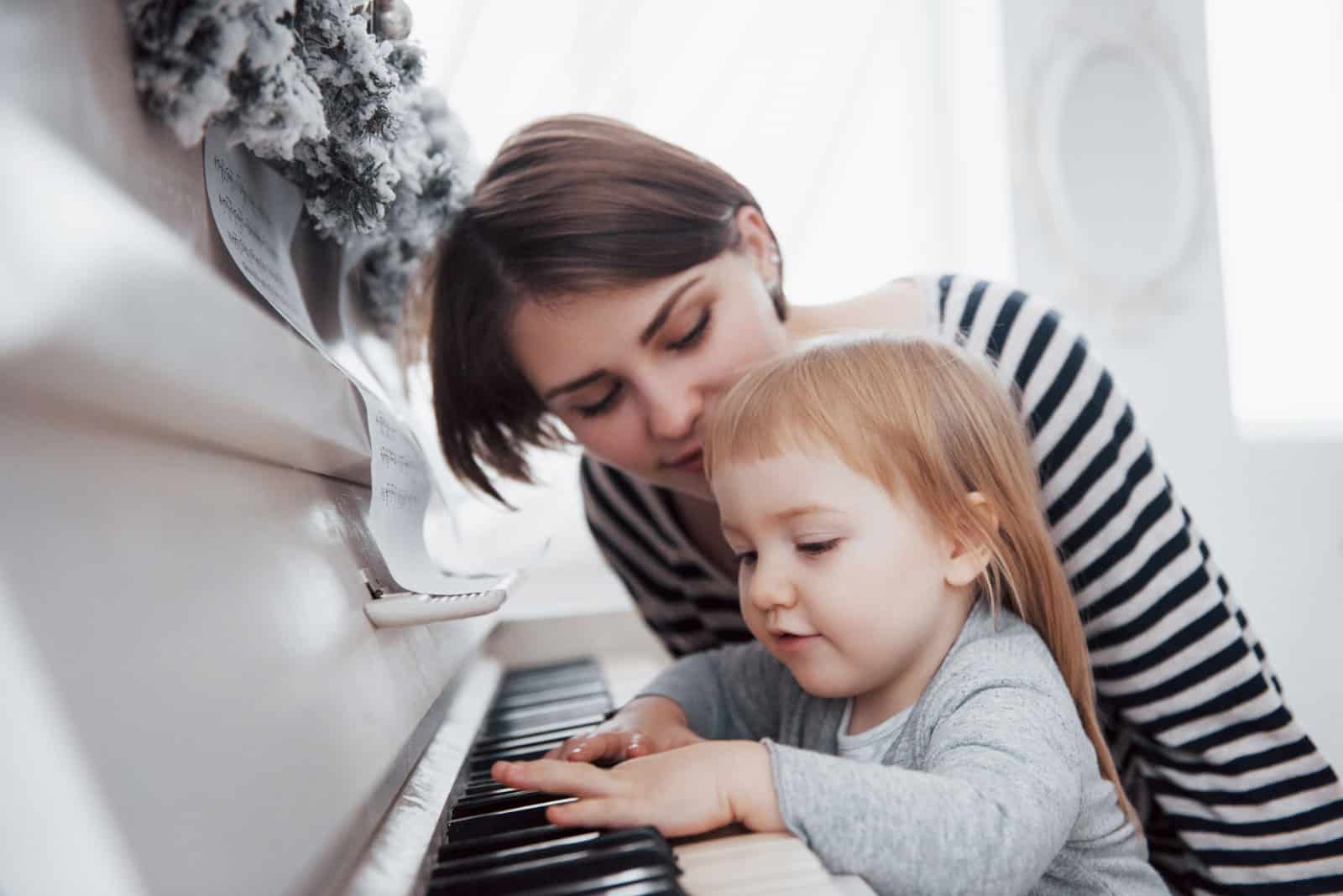
Piano Lessons for 3 Year Olds: How to Start Early in a Fun, Gentle Way
Jump to the Table of Contents Many parents wonder if piano lessons for 3 year olds are too early or just right. At this age, children are curious, busy, and full of imagination, which can make the piano a wonderful tool for playful learning when lessons are designed specifically for toddlers. In Utah, families can even work with Volz Piano, which offers the complete Volz Piano Method for kids and Piano Teachers that Drive to You, so lessons happen right at home in a calm and familiar setting. Early childhood specialists highlight that music and movement can support language, coordination, and social skills when used in short, playful bursts rather than long, formal lessons. When you apply those same principles to piano lessons for 3 year olds, you get short activities built around games, singing, and movement instead of long drills. This guide will walk you through how to tell if your 3 year old is ready, what toddler friendly piano lessons look like, how the Volz Piano Method supports very young beginners, and how you as the parent can set your child up for a positive, stress free experience. Along the way, you will find practical tips you can use today, fun piano games made just for preschoolers, and specific ideas for families in Utah who want to bring a piano tutor who drives to you straight to their living room. Whether your child turns lessons into a lifelong passion or simply enjoys a season of musical play, the habits and skills they gain at three can support their learning for many years.Table of Contents
- 1. Why Start Piano Lessons for 3 Year Olds?
- 2. Are 3 Year Olds Ready for Piano Lessons?
- 3. Benefits of Piano Lessons for 3 Year Olds
- 4. What Piano Lessons for 3 Year Olds Look Like
- 5. How the Volz Piano Method Supports 3 Year Old Beginners
- 6. Setting Up Your Home for Successful Toddler Piano Lessons
- 7. The Parent Role in Piano Lessons for 3 Year Olds
- 8. Fun At Home Piano Games for 3 Year Olds
- 9. Choosing the Right Piano Teacher or Program
- 10. When to Pause, Adjust, or Wait on Piano Lessons
- 11. Frequently Asked Questions about Piano Lessons for 3 Year Olds
1. Why Start Piano Lessons for 3 Year Olds?
Parents often hear that the best age for piano lessons is between six and nine, yet many three year olds already show strong musical curiosity. They hum along to songs, bang rhythms on the table, and dance the moment music starts. Modern early childhood research shows that exposure to music at this age can support language, numeracy, and emotional skills when it is woven into playful routines rather than formal study. For example, the Queensland Government’s early childhood resource on the many benefits of music in early years notes that music and movement can help children think, move, and express themselves more confidently. This means that piano lessons for 3 year olds should look very different from lessons for an eight year old. A preschooler’s lesson is not about mastering scales or completing long theory pages. Instead, it focuses on:- Short bursts of attention, with frequent changes of activity
- Movement and singing that connect the body, the ear, and the keys
- Simple patterns on two or three keys instead of the full keyboard
- Playful stories and characters that bring musical ideas to life
2. Are 3 Year Olds Ready for Piano Lessons?
Every child develops at their own pace, so readiness for piano lessons at three is not only about age. Some children are eager to follow instructions, sit for short periods, and mimic simple rhythms. Others may need another year of open ended musical play before they are ready for one to one lessons. Instead of focusing only on the calendar, it helps to watch for developmental signs that your child may enjoy piano lessons for 3 year olds.2.1 Developmental milestones to look for
You do not need a formal assessment, but these signs suggest that piano lessons could be a good fit for a three year old:- They can sit and focus on a simple activity for three to five minutes at a time
- They enjoy listening to songs and often ask to repeat favorites
- They can follow simple one step or two step directions
- They show basic hand coordination, such as turning pages or stacking blocks
- They are curious about instruments or the sound of the piano
2.2 Signs your 3 year old might enjoy piano
Beyond development, personal interest matters just as much. You might notice:- They run to the piano whenever someone plays it
- They invent little songs while playing with toys
- They tap out rhythms on the table, couch, or their lap
- They copy melodies from cartoons or songs by ear
- They ask for “piano lessons” or pretend to teach their own stuffed animals
3. Benefits of Piano Lessons for 3 Year Olds
Even when lessons are short and playful, piano lessons for 3 year olds can offer many benefits. At this age, children are still developing core skills like language, coordination, and self regulation. Well designed music activities can support each of these areas without overwhelming your child.3.1 Cognitive and language benefits
Studies of early childhood music suggest that simple musical activities can support early literacy and numeracy. For example, Playgroup NSW notes in an article on the importance of music in toddler development that music can improve literacy and numeracy by helping children decode sounds and patterns. When your three year old claps a rhythm or sings a simple song, they are practicing listening, sequencing, and prediction, all of which will support reading and math later. On the piano, these same skills show up when your child:- Recognizes and repeats simple rhythmic patterns
- Matches high and low sounds on different keys
- Counts to two, three, or four while playing a pattern
- Repeats short melodic phrases by ear
3.2 Motor and coordination skills
Piano playing requires coordinated hands, steady posture, and finger control. At three, these skills are just beginning to develop. Short, playful piano lessons for 3 year olds can give children chances to practice small, controlled movements without stress. Head Start’s guidance on music and child development points out that musical movement, such as clapping, stomping, and jumping, helps young children refine gross motor skills. On the piano bench, those same concepts appear as:- Sitting with feet stable on a box or step stool
- Using whole arm movements to reach groups of keys
- Learning to drop relaxed fingers onto a key without banging
- Coordinating one hand at a time before combining both hands later
3.3 Social and emotional growth
Music is a powerful emotional language for preschoolers. Songs help them process feelings, connect with others, and build confidence. Resources such as the Queensland Government’s article on benefits of music in early childhood highlight how musical routines can lift mood and help children manage transitions during the day. Through piano lessons for 3 year olds, children can:- Express feelings through loud or soft playing
- Experience pride when they share a tiny “concert” for family
- Practice taking turns with a parent or sibling at the keyboard
- Learn patience by waiting for their musical “turn” in a game
4. What Piano Lessons for 3 Year Olds Look Like
If you imagine a three year old sitting perfectly still for thirty minutes, copying scales and reading notes, the idea of early piano lessons can feel unrealistic. In reality, toddler friendly piano lessons are more like a series of mini games that move between the bench and the floor. Many teaching approaches, including the Volz Piano learning methods for kids, build lessons from short “segments” that match a preschooler’s attention span.4.1 Length and structure of toddler lessons
Typical piano lessons for 3 year olds might last fifteen to twenty minutes, with the option to extend as the child grows. A sample structure could look like this:- 2 minutes: Hello song with clapping or movement
- 3 minutes: Rhythm game on the floor using shakers or tapping
- 3 minutes: Simple black key pattern using one or two fingers
- 3 minutes: Listening game, such as high versus low sounds
- 3 minutes: Short “composition” where the child chooses a pattern
- 2 minutes: Goodbye song and sticker or simple reward
4.2 Play based learning activities
Three year olds learn best through play. That is why many lesson elements feel like games:- Using stuffed animals to “jump” on black keys in specific patterns
- Rolling a foam die to decide how many times to play a pattern
- Matching flashcards with pictures of high and low animals to sounds on the piano
- Stepping, marching, or tiptoeing around the room to match loud or soft music
4.3 Group vs private lessons for 3 year olds
Some parents wonder whether group classes or private lessons are better at three. Group music classes can be a great introduction, especially when they involve scarves, simple instruments, and parent participation. Articles such as this discussion of early childhood music classes for ages 2 to 3 describe how group music time can build language, listening, and social skills. Private piano lessons for 3 year olds can work well when:- The teacher is experienced with very young children
- The lesson is short and highly flexible
- A parent stays nearby to support and encourage
- The environment is calm, familiar, and free from pressure
5. How the Volz Piano Method Supports 3 Year Old Beginners
Because Volz Piano focuses specifically on children, its method naturally adapts to very young beginners. The Volz Piano home page explains that the complete Volz Piano Method for kids ties together reading, rhythm, technique, and creativity so that children see how each piece of the puzzle fits together. For a three year old, this means lessons are built from simple, connected experiences instead of random activities.5.1 Intervallic reading and ear training made simple
In the Volz Piano Method, children learn to recognize intervals, or the distance between notes, instead of memorizing every key and line by name right away. For three year olds, this might begin with:- Playing two black keys in a row and feeling the “step” between them
- Hearing a high note and a low note and pointing to which is higher
- Clapping short and long rhythms and matching them at the keyboard
5.2 Creative improvisation for tiny hands
Another key feature of the Volz Piano Method is creativity. Children are encouraged to improvise, arrange simple tunes, and experiment with sounds. For a three year old, this might look like:- Choosing two or three favorite black keys as their “magic keys”
- Playing those keys in different orders while the teacher accompanies with chords
- Changing the way they play, such as slow, fast, loud, or soft, to tell a story
- Adding animal sounds or simple lyrics to their patterns
5.3 Piano Teachers that Drive to You in Utah
One special advantage for Utah families is that Volz Piano offers kids piano lessons at home with teachers who drive to you. For three year olds, travel can be tiring, and unfamiliar studio spaces may feel overwhelming. In home lessons help toddlers feel secure, which often leads to better focus and more joyful participation. When a Volz Piano teacher visits your home, they can:- Observe your child in their natural environment
- Adapt lesson length and pacing based on daily energy and mood
- Use your child’s toys and books as part of piano games
- Collaborate with you on routines that fit your family schedule
6. Setting Up Your Home for Successful Toddler Piano Lessons
You do not need a grand piano or a music room to begin piano lessons for 3 year olds. However, a few simple choices about instruments and space can make lessons smoother and more enjoyable. The goal is to create a little music corner that feels inviting and child friendly.6.1 Choosing the right instrument for a 3 year old
For most families, there are three main options:- An acoustic piano, upright or grand
- A full size digital piano with weighted keys
- A smaller, touch sensitive keyboard as a starter option
- Keys that are easy to press without strain
- A stable stand or cabinet height that can be adjusted with a bench
- Simple, clear sounds without too many distracting effects
6.2 Creating a distraction light practice space
A three year old’s attention can be pulled away by toys, screens, or siblings very quickly. Wherever you place the piano or keyboard, try to:- Keep screens out of sight during lesson and practice time
- Store a small basket of music specific toys nearby, such as rhythm sticks or scarves
- Use soft lighting to create a calm mood
- Choose a time of day when your child is usually rested and fed
6.3 Building a simple practice routine
Practice for three year olds should feel like a game, not a chore. A realistic routine might be:- Three to five minutes of piano play on most days
- A simple “start ritual” like singing a hello song while sitting at the bench
- One or two activities from the lesson, repeated once
- A fun free play moment at the end where your child “explores” sounds
7. The Parent Role in Piano Lessons for 3 Year Olds
At three, children cannot manage practice or lesson organization on their own. Your involvement can make the difference between a frustrating experience and a joyful one. Fortunately, your role does not require advanced musical skills. Instead, it is about support, encouragement, and partnership with the teacher.7.1 Being a practice partner, not a taskmaster
When your child is very young, think of practice as shared play. You can:- Sit beside them at the bench and copy simple patterns together
- Clap along or march with them during rhythm games
- Celebrate tiny wins, such as remembering a pattern or trying a new sound
- Model a calm response when mistakes happen
7.2 Motivating without pressure
Praise effort instead of perfection. For example, you might say:- “I love how carefully you listened to that high and low game.”
- “You tried that rhythm again even when it was tricky. That is brave.”
- “Your song sounded happy. Can you show me a quiet song next?”
8. Fun At Home Piano Games for 3 Year Olds
Even without formal sheet music, you can turn your piano or keyboard into a playground for your three year old. Here are several game ideas that echo the Volz Piano approach and pair well with guidance from blogs like teaching kids piano at home with Volz Piano.8.1 Pre reading games away from the piano
Before your child even touches the keys, you can build listening and rhythm skills:- Rhythm echo: Clap a short pattern and ask your child to echo it. Start with two claps and build up to four.
- Sound sorting: Fill two containers with different objects, such as rice and beans, and shake them. Ask your child which one sounds “higher” or “lower.”
- Slow and fast walk: Play a song on your phone at a slow speed and walk around the room, then play a faster piece and run or tiptoe. Connect speed of movement to speed of music.
8.2 Keyboard geography games
Once your child is at the instrument, help them discover patterns on the keys:- Two black keys, three black keys: Have your child find groups of two black keys and touch them gently, then groups of three. Turn it into a “treasure hunt.”
- Dog and cat keys: Assign animal names to certain keys near middle C and create stories about where they “live.”
- High sky, low ground: Play notes at different parts of the keyboard and ask if the sound is closer to the “sky” or the “ground.”
8.3 Rhythm and movement games
Because three year olds are constantly moving, blend piano time with full body motion. Ideas inspired by resources like music and movement activities for preschoolers include:- Stand, sit, play: When the music on the piano is loud, your child stands and marches. When it is soft, they sit and listen. When it stops, they play one special key.
- Freeze and play: Put on a short song, dance together, and freeze when the music stops. After each freeze, play a tiny “ta da” on the piano with one or two fingers.
- Beat on the bench: Tap the steady beat on the bench, then transfer that beat to a low group of keys using one finger.
9. Choosing the Right Piano Teacher or Program
Once you feel your three year old is ready, the next step is choosing a teacher or program that understands toddlers. Not every excellent pianist is a good match for this age. You want someone who values curiosity, patience, and long term growth over fast results.9.1 Questions to ask a potential teacher
When you speak with a teacher or a studio, consider asking:- How much experience do you have with students who are three years old?
- What does a typical lesson for a three year old look like with you?
- How long are the lessons, and are they flexible in length at first?
- How do you involve parents in lessons and practice?
- How do you respond if a child is shy, energetic, or easily frustrated?
9.2 Why in home lessons can be ideal for three year olds
In home lessons remove the stress of travel and unfamiliar surroundings. This can be especially helpful for three year olds who are still building confidence in new situations. With Volz Piano’s Piano Teachers that Drive to You in Utah, families gain several advantages:- A familiar environment where the child already feels safe
- Flexible scheduling that fits nap times and family routines
- Opportunities for siblings to observe or join select activities
- Easy communication between parent and teacher before or after lessons
9.3 How Volz Piano serves families in Utah
Volz Piano focuses on children and has built its method around the way kids think and learn. They pair the complete Volz Piano Method with convenient in home lessons across parts of Utah, so parents can focus on supporting their children instead of driving to multiple activities. Articles like kids piano lessons at home and private piano lessons at home outline how the program works from a parent’s perspective. For three year olds, this means lessons that:- Start with playful musical experiences tailored to their age
- Gradually introduce more structure as they grow
- Emphasize listening, creativity, and confidence alongside reading
- Involve parents as partners in a positive, supportive way
10. When to Pause, Adjust, or Wait on Piano Lessons
Even with a well designed program, some three year olds are not quite ready for regular piano lessons. This is normal. The goal is not to push through resistance, but to notice what your child is telling you and respond with flexibility.10.1 Signs your child needs a different approach
Watch for patterns like:- Frequent tears or frustration before or during every lesson
- Refusal to approach the piano, even for games
- Extreme tiredness during lesson time, despite schedule adjustments
- Strong preference for free play over any guided activity
10.2 Growing into more formal lessons at ages 4, 5, and beyond
If your three year old needs a break from structured lessons, that does not mean they are not musical. You can keep music in their life through:- Singing together daily
- Attending early childhood music classes with parent participation
- Playing simple rhythm and movement games at home
- Listening to a variety of music styles during playtime